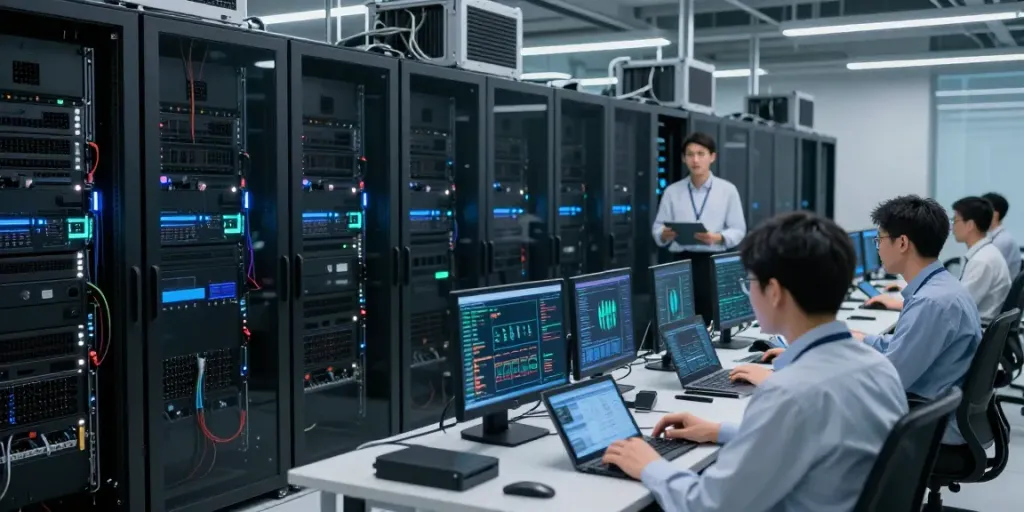
Understanding GPU Computing in AI Infrastructure
In today's rapidly evolving technological landscape, GPU computing has emerged as a cornerstone of artificial intelligence (AI) infrastructure. As industries increasingly lean on AI for data processing, analysis, and decision-making, the demand for efficient computing solutions has never been higher. Graphics Processing Units (GPUs), originally designed for rendering graphics, are now at the forefront of computational tasks that involve vast amounts of data and complex algorithms. This article delves into the role of GPU computing within AI infrastructure, examining its benefits, trends, and the challenges faced in the current landscape.
What is GPU Computing?
GPU computing refers to the use of Graphics Processing Units in place of conventional Central Processing Units (CPUs) to perform complex computations more efficiently. This technology leverages the parallel processing capabilities of GPUs, allowing for simultaneous execution of multiple threads—an attribute essential for handling large datasets typical in AI workloads. Unlike CPUs, which are optimized for sequential task processing, GPUs excel in tasks requiring high throughput, such as the training of deep learning models.
How GPU Computing Powers AI Models
AI models, particularly deep learning algorithms, require substantial computational resources for training and inference. The parallel architecture of GPUs allows them to process training data in batches, significantly speeding up the learning process compared to traditional CPU methods. For instance, while a CPU may handle dozens of threads simultaneously, a GPU can manage thousands, making it highly suitable for tasks like image recognition, natural language processing, and real-time data analytics.
Key Benefits of GPU Computing for AI
- Speed: GPUs can drastically reduce the time needed for training AI models, enabling faster iterations and deployment.
- Scalability: With the ability to handle larger datasets, GPUs allow businesses to scale their AI applications without a linear increase in processing time.
- Energy Efficiency: GPUs are generally more energy-efficient than CPUs for specific tasks, resulting in lower operational costs, particularly when processing large quantities of data.
- Cost-Effectiveness: As GPU technologies have advanced, the cost of high-performance GPUs has decreased, making them more accessible for businesses of all sizes.
Current Trends in GPU Computing for 2026
The landscape of GPU computing is changing rapidly, driven by continuous advancements in technology and increasing demand from AI applications. Here are the current trends shaping the field:
Emerging Technologies Driving GPU Efficiency
Innovations in GPU architecture are improving efficiency and performance. For instance, the emergence of dedicated AI processors and enhancements in cooling technologies are enabling more powerful GPUs to operate sustainably. The rise of heterogeneous computing platforms, which combine multiple types of processors, also promises to optimize performance for specific applications, further enhancing AI capabilities.
AI Workloads and Performance Metrics
As businesses begin to adopt AI more extensively, understanding performance metrics becomes crucial. Workloads must be assessed based on speed, accuracy, and resource consumption. Metrics such as throughput—the number of data items processed in a given time—and latency—the time taken to process a single request—are becoming standard for measuring GPU performance in AI.
Future Predictions for GPU Development
Looking ahead, the demand for AI capabilities is expected to drive continued investment in GPU technology. Predictions suggest that GPUs will become even more specialized, with designs optimized for specific types of AI tasks, such as reinforcement learning or generative adversarial networks (GANs). Additionally, the integration of AI into GPU computing itself will lead to more autonomous systems capable of optimizing performance dynamically.
Building a Robust AI Infrastructure
Establishing a solid AI infrastructure requires careful planning and investment in the right technologies. Key components to consider include:
Essential Components of AI Infrastructure
- Power Supply: Reliable energy sources are crucial for maintaining GPU operations. Advanced AI factories are increasingly looking at renewable energy solutions to support sustainable computing.
- Data Storage: High-speed storage solutions must be integrated to support the massive datasets that GPUs will process.
- Networking: Robust network infrastructure is essential for facilitating seamless communication between distributed GPU resources.
Optimal GPU Server Configurations
Choosing the right GPU server configurations is pivotal. Several factors should be considered, such as the number of GPUs per server, the type of GPUs used (e.g., NVIDIA A100 vs. V100), and the server architecture (rack-mounted vs. blade servers). Utilizing cloud-based GPU resources can also offer flexible scaling options that cater to fluctuating demands.
Scalable Solutions for Growing AI Demands
As AI adoption grows, scalability becomes increasingly vital. Infrastructure must accommodate rising demands without compromising performance. Solutions such as containerization and orchestration tools (like Kubernetes) can enhance scalability and resource allocation, enabling dynamic adjustments based on workload requirements.
Challenges and Solutions in GPU Computing
While there are numerous advantages to GPU computing, several challenges must be addressed:
Common Issues in AI Workloads
AI workloads can be prone to issues such as data bottlenecks and inefficiencies in model training. Identifying these problems early on through comprehensive monitoring and diagnostics can help mitigate their impact.
Overcoming Power and Cooling Challenges
High-performance GPUs generate significant heat, necessitating advanced cooling solutions. Strategies like liquid cooling or advanced air cooling systems can maintain optimal operating temperatures, ensuring reliability in performance.
Best Practices for Managing GPU Resources
Efficient management of GPU resources can lead to improved performance. Key practices include:
- Implementing workload scheduling to optimize GPU utilization.
- Regular performance monitoring to identify and address inefficiencies.
- Using resource allocation frameworks to ensure equitable distribution of GPU resources across competing workloads.
Participating in the AI Token Economy
The AI Token Economy provides individuals and companies an opportunity to participate in the growing AI landscape by supporting infrastructure that powers AI services. In this section, we will discuss how participation works and the benefits it offers.
Your Role in Supporting AI Infrastructure
By investing in AI infrastructure, individuals can help support operations that rely on GPU computing for their AI workloads. This participation aligns with the growing demand for AI services across various sectors, creating opportunities for rewards based on resource contributions.
Calculating Contribution Rewards from GPU Support
Reward systems are typically established based on the power contribution and the operational performance of the infrastructure. For instance, when participating in the AI infrastructure ecosystem, your contribution is measured by the electricity needed to support GPU workloads, and this directly correlates with the rewards received from successful operations.
Case Studies of Successful GPU Participation
Several organizations have already experienced success by engaging in the AI Token Economy through effective GPU resource management. For example, a tech startup focusing on natural language processing was able to scale its operations by utilizing a GPU-based cloud infrastructure, leading to faster deployment times and increased customer satisfaction.
What is the Role of Power in AI Token Services?
Power resources play a critical role in the AI Token Economy as they ensure that GPU computing remains sustainable. The capacity to manage and allocate power efficiently facilitates the operations behind various AI services, ultimately driving growth and innovation in the field.